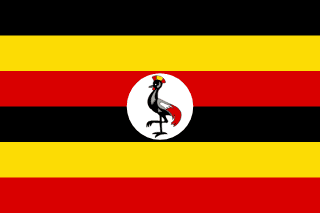
Globle answer today
Today's Globle answer is Uganda for October 22, 2026, confirmed against the official game and shown in the reveal card above. If you would rather finish the map yourself, the hint card gives region and border clues. Below: anchors that bracket any country and the heat-map reads that cut averages in half.
Nine-guess weeks, and what the heat map is actually saying
The way most people play Globle badly: opening guesses are famous countries they can spell, and the heat map tells them nothing. Deep red on Japan, deep red on the UK, deep red on the US: three guesses gone, one hemisphere eliminated, and the map barely warmer than at the start.
The realization that fixed it: the color on each guessed country is a distance reading. Cold red is far, orange is close, and the mystery country itself comes back green. Globle is not a guessing game with a map attached. It is a distance sensor you aim by picking countries, and once you read it that way, the whole game reorganizes.
Scale matters too. A reading that translates to four thousand kilometers narrows the answer to a continent. A reading in the hundreds narrows it to a neighborhood of bordering countries. The skill is converting color to distance band quickly, and it comes faster than you would expect, about two weeks of deliberate play before the map starts reading like text.
Today's Globle answer: Uganda for October 22, 2026
Today's Globle answer is Uganda, the one country for October 22, 2026. The dated searches, Globle answer today, the Globle country for October 22, 2026, today's Globle hint, all resolve to this same country, and it matches every mirror of the official game.
Still mid-solve? Work the hint card first: it gives the region and the border clues, which is usually enough to finish the board honestly. The answer card is right above it when you are ready, and Uganda is what it will say.
One answer per day, reset at midnight, no time-zone tricks. Whatever October 22, 2026 is where you live, the country is Uganda, and tomorrow is a new map.
The one habit for October 22, 2026 and every date
Before you reveal, guess one country adjacent to your hottest orange. Bordering countries solve most Globle puzzles faster than any clever distant guess: the map pays you for proximity.
Three anchors that bracket any country on Earth
A strong opener set is three countries, one per major region: China for central Asia, Germany for central Europe, Brazil for South America. Three guesses give three distance readings, and the answer is pinned to a continent. From there it is two or three more guesses on most puzzles.
Central countries earn their spot for a boring reason: they are far from every ocean, so their distance readings point somewhere meaningful. A coastal country like the UK half-reads into water, and the distance is technically correct and practically muddy, because half the directions it could point you do not contain any countries at all.
Rules of thumb to apply while the map fills in:
-
Open in the middle of a landmass
A central country is close to more neighbours than a coastal one, so its heat reading carries more information.
-
Add an extreme
A country at the edge of the map turns one reading into a direction: the answer is on the side the two guesses disagree about.
-
Name the borders in the warm band
When two guesses are close, the answer shares a border with one of them. Testing border neighbours is faster than testing big names.
Reading the map after the anchors
- Deep red across all three anchors: the answer is in the hemisphere none of them touch: Africa and Oceania are the usual suspects
- One warm reading: work within that region and ignore the rest of the map entirely
- Orange on a country: the answer is within a border or two: guess neighbors, not landmarks
- Green: solved, and the game shows the exact distance for the record
- Red twice in the same region: stop guessing there. Two reds is a verdict.
Why the boring central country beats the famous one
Guessing countries you have heard of feels productive and is statistically terrible. Popularity has nothing to do with geography. The map does not care which countries make the news. What it rewards is coverage, and coverage comes from guesses that partition the planet into roughly equal chunks.
Every guess is a point, and the distance reading is a circle around it. The target sits somewhere on that circle. Three well-spaced circles intersect in one small region; three overlapping circles from the same corner of the map intersect in a smudge. Same number of guesses, completely different information.
That is also precisely how the Globle solver on this site works, it computes distances from every country to your guesses and ranks the candidates that fit all your readings. Use it after your anchors to confirm the shortlist, or run it independently to check that your own triangulation and its ranking agree. Watching the solver work teaches the circle trick faster than playing alone does.
| Reading | Usable signal |
|---|---|
| Deep red | The closest band — test a bordering country next. |
| Orange | Same region. You have a direction, not a border. |
| Cooler | Rules out a whole region of the map. |
| Cold | Still useful: it fixes one end of the bracket. |
The geography lesson hiding in a five-minute game
Nobody plays Globle to study, which is why it works as a teacher. The heat map makes distance physical in a way capital-city lists never did. The boundaries of Central Asia are easy to miss on paper, and no textbook fixes that as fast as one orange reading on Kazakhstan does.
The habit that compounds: after each solve, name the borders of the answer country. Ten seconds converts a win into a mental-map upgrade. Over time, the difference shows up on days the answer is a country that was previously hard to place, the anchors bracket it and the neighbors fall, because the mental map finally has that region filled in.
For days that stump you, the archive plus the solver is the replay lab. Pull up the old puzzle, play it again, and watch which guesses wasted distance. Replay losses tend to share one signature: too many famous-country guesses before the anchors went in. Every time.
What the daily reveals teach when you read a month of them
The reveal page looks like an answer key, but read a month of them in sequence and it is a curriculum. Each day shows the country plus the color trail your guesses painted, and the trail is a worked example of distance reading: where the map went warm, where you ignored it, how many guesses the region actually needed.
A pattern in the reveals: continental rhythm. Globle rotates through the continents, loosely. Predicting the next region is unreliable, but knowing there is a rotation prevents anchoring three guesses in the same hemisphere on consecutive days.
So the daily loop worth running: solve today with anchors, read the reveal trail, name the borders, and let tomorrow be marginally easier. That loop is the entire reason the average halved, and it costs about three extra minutes a day.
A last note for competitive players: guess count is the whole scoreboard, and the anchors buy you a low floor. The worst days are the days you skip an anchor because you "have a feeling" about a region. That feeling is usually a continent off, and it costs two guesses. The anchors never cost anything, they pay rent every single day, on every map the game can draw.
Globle map questions
What is today's Globle answer?
Uganda: the answer for October 22, 2026, identical across every source that mirrors the official game. The mystery country resets at midnight with the next day's map.
How do you play Globle?
Guess any country; the map colors it by distance to the mystery country, from cold red to hot orange, green when you find it. Unlimited guesses, but your score is how few you needed.
What is the best first guess in Globle?
A large central country: China, Germany, Brazil. Central guesses give clean distance readings; coastal and famous countries spend a guess on muddy signal.
Is there a Globle hint for October 22, 2026?
Yes: the hint card on this page carries the region and border clues for the October 22, 2026 puzzle, enough to finish the solve without the full reveal. The answer card shows Uganda when you are ready.
Can I play old Globle puzzles?
The archive keeps every past answer, and replaying old maps with the solver open is the fastest way to build the distance-reading instinct without touching a streak.